設計發浪!日本設計名人案內所 ( design surfing / デザインサーフィン ) 日本デザインのコアや魅力などのをこのブログを拠点とし、台湾のあちこちに発信しにいきます。


Designsurfing Brings Four Taiwanese Creators to Design Miami Seoul 2026

Design Miami Seoul 2026 Announces Participating Exhibitors and International Partners
This September, Designsurfing and Admira Gallery will unfold two distinct yet interconnected international trajectories in Seoul.
Designsurfing has been invited to participate in Design Miami Seoul 2026 as a Partner, presenting four groups of Taiwanese creators — Damonxart, Yen-An Chen, Object Weiv, and Li-Sheng Kang — as part of the curated In Situ section. Meanwhile, Admira Gallery will make its debut at Frieze Seoul 2026, joining the newly launched Material Practice section and engaging with the international art market from the perspective of a contemporary art gallery.
This marks the first time since Designsurfing and Admira Gallery established their Joint Venture partnership that the two platforms will simultaneously take part in Design Miami and Frieze Seoul within the same city and during the same international art week.Approaching the cultural landscape from the distinct perspectives of design and contemporary art, the two platforms also embody different yet complementary areas of expertise. Designsurfing continues to connect Asian creators, design culture, and international exchange, while Admira Gallery focuses on artist representation, curatorial practice, collecting, and the long-term development of artists within the international art market.
While maintaining their own professional identities and roles, both platforms share a long-term commitment to cultural exchange across Asia, the development of creators, and meaningful international connections.

Admira Gallery Announces Its Curatorial Plan for Frieze Seoul 2026
From Taiwan to the World: Making “Light” a Shared Language of Dialogue
Design Miami Seoul 2026 will hold its VIP Preview on August 31, followed by the public opening from September 1 to 6 at Dongdaemun Design Plaza (DDP) in Seoul. Under this year’s curatorial theme, “Resonance,” the fair explores how design can create connections across cultures, time, and human relationships.
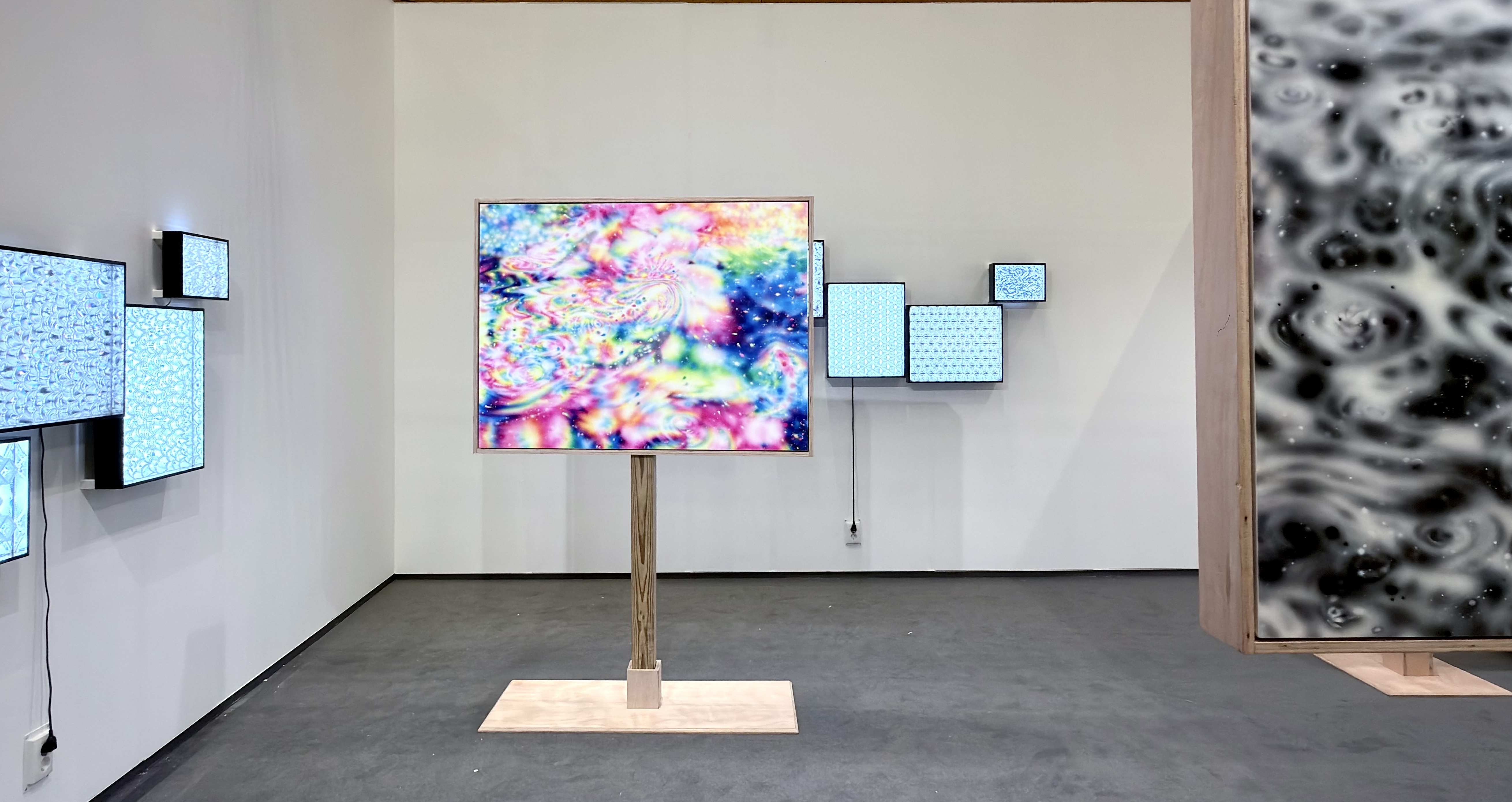
For the In Situ presentation, Designsurfing brings together four groups of Taiwanese creators from diverse creative backgrounds under the concept “Light Through Matter|光之共鳴,” exploring the relationship between light and material.Light itself has no fixed form, yet our perception of it shifts dramatically depending on material, technique, and point of view. Through color, neon, material forming, and luminous objects, the four practices transform something intangible into a presence that can be seen, sensed, and even reshape the way space is perceived.


Moving continuously between digital practice and physical works, Damonxart draws from accumulated memories of skies, horizons, and colors encountered through travel, exploring how light, refraction, and gradients can transform the experience of seeing. Yen-An Chen, meanwhile, translates field research into objects. Through works such as the Neon Lamp Series, he repositions neon beyond its familiar role as an urban visual sign, turning it into a design language through which material, culture, and perception can be reconsidered.


Object Weiv approaches creation through material research and manufacturing processes, using techniques such as vacuum forming to explore the forms and visual transformations produced as light passes through matter. Li-Sheng Kang works primarily with paper fiber as his artistic language. Using paper mulberry fiber as his base material, he builds organic forms through repeated processes of pulp pouring, layering, and drying, gradually creating structures that balance physical presence with sensory delicacy.
Rather than attempting to define a singular “Taiwanese style,” the four practices reveal a quality shared by many contemporary Taiwanese creators: an openness toward different cultures, materials, and technologies, together with the ability to move fluidly across the boundaries of design, craft, technology, and art.
From Design Miami to Frieze: Two Different Expressions of “Light”
During the same week, at COEX in Seoul’s Gangnam district, Admira Gallery will participate in the Material Practice section of Frieze Seoul 2026.

塚本智也 Tomoya Tsukamoto / Swimming in the Universe / 2016 / Acrylic、Canvas / 97 x 130.3 cm (F60)
Curated by Korean independent curator Hyeyoung Cho, Material Practice examines emerging relationships between contemporary art, design, and craft, as well as the ways material-driven practices are entering the broader systems of contemporary art and collecting. As one of the international galleries selected for the section, Admira Gallery will present a two-person exhibition by Japanese artists Tomoya Tsukamoto and Atsuro Miyako, creating a contemporary dialogue around material, light, and perception through the idea of “light painting × light sculpture.”

都淳朗 Atsuro Miyako / Juvenile:Positive / 2026 / PET、Polarizer、LED、Acrylic、Aluminum / 31.9x 23.2 x 6.6 cm
Interestingly, the presentations at Design Miami and Frieze Seoul both take “light” as a point of departure.At Design Miami Seoul, four groups of Taiwanese creators approach light through design, materials, and technology. At Frieze Seoul, two Japanese artists explore the perception of light through painting and sculpture. Moving between the two exhibitions allows audiences to see how creators from Taiwan and Japan respond to the same seemingly intangible subject through entirely different materials, processes, and artistic languages.
Light therefore becomes an unexpected connection between the two platforms. On one side, design moves toward the realm of collecting; on the other, contemporary art returns to material as a fundamental point of inquiry. Neither offers the same answer, yet both point toward a larger question: how can Asian creators enter today’s international art and design discourse through their own cultural backgrounds and creative methodologies?
From Curating to the Market: What Comes Next for Collectible Design in Taiwan?
In addition to the In Situ exhibition, Chad Liu, representing Designsurfing, has also been invited to participate in this year’s Design Miami Talks.On September 3, the panel “Design and the Marketplace | Where Is the Collectible Design Market Heading?” will be moderated by Hyeyoung Cho, Curatorial Director of Design Miami Seoul 2026. Liu will join Jen Roberts, CEO of Design Miami; Jesse Lee, Chairman of Design Miami and CEO of Basic.Space; and Jongwoo Kwak, Specialist at K-auction, in a discussion exploring the future of collectible design from a range of cultural and market perspectives.

Drawing from his recent experience curating ΔDesignArt in Taiwan, as well as his ongoing engagement with the design and art scenes across Taiwan, Japan, and Korea, Chad Liu will discuss Taiwan’s distinctive role and position within the broader Asian design and art market.Situated at an important point of exchange between Northeast and Southeast Asia, Taiwan has developed through the long-term intersection of Japanese, Korean, Southeast Asian, and broader Chinese cultural influences. From this position, Taiwan may not need to replicate established Western market models, but instead has the potential to develop a path of its own.
The panel will further examine this question together with market professionals from Europe, the United States, and Korea: as the global collectible design market has long been shaped by institutional frameworks and systems of value established in the West, can Asian creators develop another route onto the international stage — one grounded in their own cultures, materials, and industrial conditions?
For Chad Liu, the development of collectible design is not simply about “making design more expensive.” Rather, it is about rebuilding the relationships between creators, works, curatorial narratives, collectors, and the market.
Compared with the already mature institutional structures of the fine art market, collectible design in Asia is rapidly developing its own language. Taiwan possesses sophisticated manufacturing capabilities, a rich culture of material experimentation, and a highly hybrid cultural environment. As a result, its creators often move naturally across the conventional boundaries of industrial design, craft, and art.
What still needs to be developed is a stronger framework through which these works can be understood, discussed, collected, and ultimately transformed into cultural value that can accumulate over time. This is also one of the questions Designsurfing has continued to explore as it has expanded from a media platform into curatorial practice.

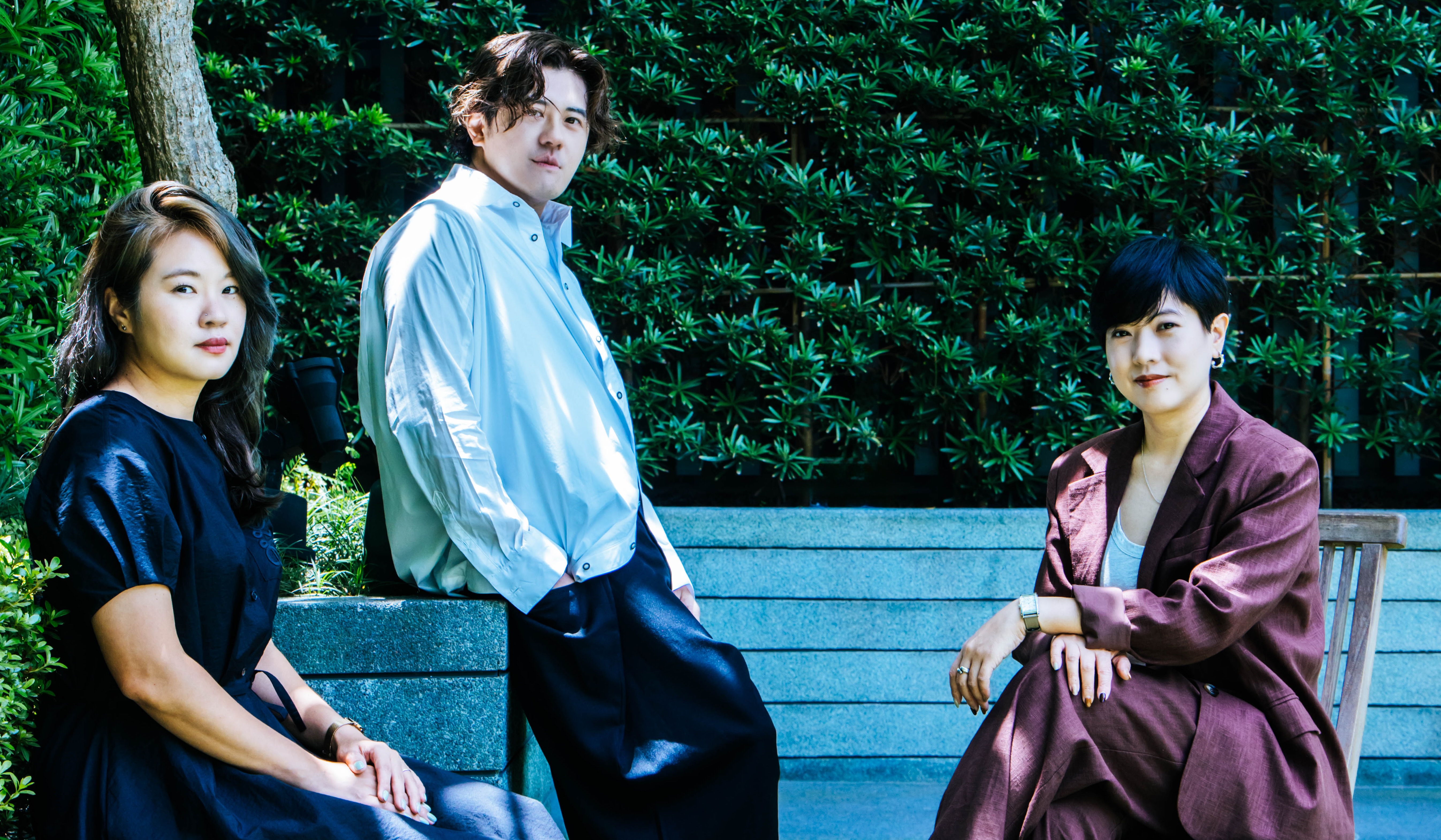
photo by Yen-An chen / Box Huang
Not Simply Taking Taiwan Abroad, but Making Taiwan a Node of Exchange in Asia
The deeper ambition behind this trajectory is not simply to “bring Taiwan overseas.”More importantly, it is about enabling Taiwan to become an active node within Asia’s cultural network — a place where exchange continues to take place.
As Tokyo, Seoul, Taipei, and other Asian cities gradually develop their own cultures around Designart, Collectible Design, and contemporary craft, the next question may no longer be how Asia can catch up with Europe and the United States.
Instead, the question becomes:Can Asia build another way of understanding the value of design and art — one grounded in its own cultural experiences, materials, manufacturing systems, and collecting markets?
Two platforms, two roles, and two different paths.
In Seoul in 2026, Designsurfing and Admira Gallery will set out from Design Miami and Frieze Seoul respectively, seeking to channel the creative energy of Taiwan’s design and art scene into a vibrant bridge connecting Taiwan with the international stage.